Followers

Showing posts with label Culture. Show all posts

15 April, 2012

Legally Married by Law :)

Legally married by law...

Last month, on the 22 of March 2012 me and Mr. M registered our marriage at Jabatan Pendaftaran Negara. I should have shared that moment earlier but so many things need to be taken care of. Anyway, here is our wedding registration in the KadazanDusun traditional costume...


Blessing at the church and reception will be this coming Saturday. Suddenly I feel so nervous, I just hope that everything will went well as we plan...

If you happen to live around Kota Kinabalu, do welcome to our wedding mass and thereafter to our reception. Contact me by email or simply drop your email at comment box so I can give you the details :)


Our happy face...haha

28 April, 2011

Sumazau Mingkung

Sumazau Dance

View The First Dance of Newly-Weds

Kota Kinabalu: Most Sabahans may think they have seen it all - the Kadazan Sumazau dance. But what about a specific dance called Sumazau mingkung - the first dance together for newly weds?
That could be new for many attending the Sabah Fest 2011 cultural extravaganza on April 30 and 1 May, at the Sutera Harbour Magellan Grand Ballroom.
For Kadazans of Penampang, the Sumazau Mingkung is a specific dance performed especially as a tribute to a newly-married couple.
On wedding day, the groom heads for the bride's house in a procession with the bridewealth (nopung) on hand.
On arrival, gongs beat and the nopung is taken from him, the bride appears at the entrance and the bobohizan (ritual specialist) uses a popodu - a bunch of five types of leaves to sprinkle water to perform a ritual called vokis, to bless the newly weds.
After the blessing, the couple place a foot each on a round stone called pampang at the bottom of the stairs while the bobohizan symbolically holds the conical hats called seraung, over their heads.
The stone and the hats symbolize strong and lasting marriage while the hats represent shields to protect them from evil on wedding day and thereafter.
After a few short mantras, the bobohizan would then enter the house.
In the house, the couple performs their first Sumazau dance together as a married couple with the bobohizan and other elders surrounding them, performing that specific dance called Sumazau mingkung.
After that first dance, relatives and guests are invited to join in.
This is the unique dance and ceremony the Sabah Fest audience will see on 30 April and 1 May.
Tickets are priced RM30 and RM50.
Call Sabah Tourism , Gaya Street 6088-212121 or Sri Pelancongan Sabah Sinsuran, 6088-232121.
(source : Daily Express)

This Sumazau Mingkung dance is new to me and I am sure for most of the Sabahan too. I am wondering how this dance look like, is it the same step with  the Sumazau? The picture above is not Sumazau Mingkung dance. I try to Google it but found none. So, the only way to satisfy the curiosity is to attend the Sabah Fest 2011 event at the Sutera Harbour Magellan Grand Ballroom.
Or maybe there are someone out there familiar with this traditional dance. If yes, please share it here...
Interesting...isn't it? We read, watch, learn and think we know all about our culture, tradition or tribe but the truth is there are so many things still uncover. The deeper we dig, the more we want to know. It is not a force for us to learn and know our own culture but it is more to responsibility to prevent the culture lost in time...

07 April, 2011

Mompisok, KadazanDusun Death Ritual


Hello everyone, today I would like to share our tradition mompisok the KadazanDusun death ritual. Before you read more, I would like to remind that this story is for sharing purpose only and I don't have any intention to force anyone to believe it. 

The original idea for this writing comes from my sister Just, so all the credit are hers :)

According to the KadazanDusun beliefs in a long time ago before they had follow or embrace any religion, they are practicing mompisok in a death ritual.

After burying the dead body, 6 days later which is call malam ketujuh (the seventh night) mompisok will be made by the family member. Mompisok means to turn off the light where someone will call and welcoming the dead spirit on that night.

My sister Just interview with an old lady…
Mompisok can remind people about death. Calling the dead spirit and family members will ask the spirit to take all his/her belongings during his/her was still alive. The family members also will ask the dead spirit not to disturb the family, but leave and be good where ever the dead spirit go.

The old lady asks my sister Just, “do you believe that the spirit will coming back?” Some had tell me, if you see them then you would believe it but then it is up to you whether you want to believe it or not. The old lady said, there are some people who can see or sense their presence. According to these peoples, their look does not change. Only the dead one will not lift their faces.

I myself had experience a couple of times this mompisok ceremony, once during the death of my great-grandmother (father’s side). On the seventh night, an adequate of ashes placed near the deceased’s belongings. After that, all the lights switched off and in the darkness someone will begin the ceremony by calling the spirit.

I must admit, it was very creepy and the silent also unbearable. No one dared to make a sound let alone a movement. In my mind, if I make even a slight movement the spirit will spot me, instantly jump at me and bring me to the unknown world. Haha…don’t blame me, I was only a child at that time.


When the lights went on, everyone especially the grown up quickly checked the ashes that been placed near the deceased’s belongings. Actually they want to see if the spirit had leaved evidence there. Something likes footprints, fingerprints or whatsoever. I still remember I had peeked on that ashes and yes I saw something on it. But please forgive me, I may be a child at that time still the moment is personal to me so I won’t share it here.

Mompisok usually will end with many thanks to those who had come that night. For your information, the KadazanDusun is still practice this kind of ceremony but it is more to Adat (traditions). Nothing more, nothing less I guess, since nowadays most of us already embrace a religion. In our area, we still practice the ceremony. But instead of switching the lights off on the seventh day, we replace it by a mass prayer.

So, that is a story I want to share with you about death rituals according to the KadazanDusun tradition. The ritual could be a little bit different by area including the name, here we call it moginturu but its purpose remains the same. I believe some of you especially the Sabahan familiar to this ritual. Perhaps, you can share your experience?

(pictures are from Google)


01 April, 2011

April Fools' Day


April Fool's Day? I don't think so...

April Fools' Day is celebrated all around the world on the April 1 of every year. Sometimes referred to as All Fools' Day, April 1 is not a national holiday, but is widely recognized and celebrated as a day where everyone plays all kind of joke and foolishness. The day is marked by the commission of good humoured or funny jokes, hoaxes, and other practical jokes of varying sophistication on friends, family members, teachers, neighbors, work associates, etc. (source : Wikipedia)


When I was young, I thought April Fools Day is something funny and a day where we can play all kind of jokes to our friends or family members. And seriously, I thought it is OK and a must too to ‘gotcha’ someone with a hoaxes. But nowadays, I think it is not funny anymore...maybe irritating is the suitable word. Especially, when the jokes become excessive, cruel and sometimes end up with a fight, injury or worst…death.

Of course, sometimes we need to have some fun otherwise you are willing to live a dull life. Just a light humor is OK to me but when your jokes become too much until the jokes is not a joke anymore but turns out insulting peoples, that is not acceptable. Imagine, someone is insult you with a joke and everyone is laughing at you as they thought it is funny but deep down in your heart you were hurt. Believe me, if you fled (doesn’t matter if you were in tears or not) from the scenario they audience will laugh even more especially the person who ‘gotcha’ you. It only adds to the feeling of humiliate, hurt, embarrassment…  

Each year, the gags become more and more extreme. Before this, we only jokes about there is something on our friends head, the socks is not matching, there is a hole on the pants…something like that. Now, you are calling your friend that her house is on fire. Your friend make a haste, speeding home only found out later that it is just a prank calls! If something happen to your friend during her speeding home, can you forgive yourself for it? Seriously, that is a sick joke.  


In my humble personal point of view, this April Fools’ Day is not appropriate or should I say contrary to our eastern culture. We already have a beautiful culture, why we must taint it? Alright, don’t get me wrong I didn’t say that we cannot joke. You, me...everyone of us can. I myself enjoy laughing very much since laughter is the best medicine. Furthermore it can help you to look younger (hahahaha). And it is up to you about this April Fool's Day thing. However please keep in mind, we can joke but there are limits for us as a cultured person. Avoid a joke that can disgrace or sensitive to others.

PS : Happy Friday everyone…
  

04 February, 2011

Nian

- From : Google -

A story about a monster and Chinese New Year 

There are a lot of version about this monster name Nian. Anyway I pick this version to share with you. Hope you enjoy the story and your day as well...Happy Friday :)


The Spring Festival is the grandest festival for the Chinese. The Spring Festival is also called "Nian", but who knows the term, Nian, was once the name of a furious monster that lived on human beings in the ancient time. How the Festival has some relationship with the monster lies in a story about the origin and development of the Spring Festival. 

The legend says, long ago, there was a monster called Nian. It was born to be very ugly and ferocious, which looked like either dragons or unicorns. On the first and the 15th of each lunar month, the monster would come down from the mountains to hunt people. So people were very much afraid of it and locked their doors early before sunset on the days of its coming. 


- From : Google -

There lived an old wise man in a village. He thought it was the panic in people that made the monster so bold and furious. Thus the old man asked people to organize together and to conquer the monster by means of beating drums and gongs, burning bamboo, and lighting fireworks in purpose of making large noises to threaten the hateful monster. When he told people about the idea, everybody agreed on it. 

At a moonless and freezing cold night, the monster, Nian, appeared again. The moment it opened its mouth at people, burst out the frightening noises and fire made by people, and wherever the monster went, it was forced to back off by the terrible noises. The monster couldn't stop running until he fell down with exhaustion. Then people jumped up and killed the evil monster. Savage as the monster was, he lost in the end under the efforts from the cooperation of people. 


- From : Google -

Since then, people have kept the tradition by beating drums and gongs, and lighting fireworks at the coldest day in winter to drive the imagined monsters away and to celebrate the victory over it. Today, Nian refers to the New Year's day or the Spring Festival. People often say Guo Nian, which means 'live the festival.' Furthermore, Nian also means the year. For an example, the Chinese often greet each other by saying Xin Nian Hao, which means Happy New Year! Xin means new and Hao means good. 


PS : Auto Publish Entry 

30 December, 2010

Family Day


Hello, Sumandak in the house..hehe
I know everyone is so excited because Malaysia win the Suzuki Cup and tomorrow is holiday! I don't know in your area but looks like the weather outside is not so cool. I think the rain will start at any minute and I hope the rain will not down everyone's spirit.

Orait everyone, I want to share our Family Day on the 26 of December 2010, right after Christmas Day. Actually it is called Feast Of The Holy Family. The feast usually falls on the Sunday after Christmas. If Christmas falls on Sunday, the feast will celebrated the next Sunday (please correct me if I am wrong).

We conduct a lot of games. Of course every games, there will be a winner. But that is not the main purpose in the games. It is about how well you can cooperate with your family members and to be aware that unity is very important to build a strong family. The rest is about sharing the joy, fun and laughter with each other...hehehe. Okay lets check it out...

- what are they doing?? -
Melastik (how to say that in english...hehehe). Serioulsy, I really enjoy this game. This game is a must in my village and this is my first time to join it. I don't know how is the proper/exact way to use the tool, I just 'hentam keromoh' hahaha...

- the target -


This is the target. I forgot to ask the distance but for me, it seem very far away...hahahaha


The next game is to build the highest tower using pipes. This game require creativity and cooperation. The organizer provide tools as pipes, pipes connector and plastic rope. So it is up to the family members how they want to build their tower.
 
- the tower, hahaha -
There also Puzzle games. This game also require cooperation between family members. The fastest family who can arrange the whole puzzle become the winner.  It is not easy you know because the audiences suppose to encourage you but it happens on the contrary. How can you focus when the audiences becomes so noisy...hehehehe 


See, most of the games require unity and cooperation between family members. That's why we need to support each other because we need each other. And remember, unity is important in every family no matter what kind of family you have. Without family, we are nothing (are you agree with me?). Do you want to face the world alone?

P/S Don't forget to join the Giveaway fun

21 October, 2010

Kinabalu Bamboo Orchestra


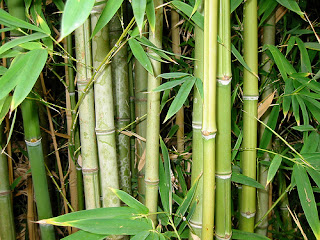
:: Bamboo tree ::
Did you know that Bamboo plays a significant role in the daily lives of Sabah’s ethnic societies? It is used as food (young bamboo shoots), building materials to build houses and rafts, entertainment such as stilt-walking and in the bamboo dance. It is also used as musical instruments.

Bamboo is crafted into woodwind and percussion instruments such as the sompoton (bamboo aerophone), bungkau (jaw harp) and tagunggak (hollow bamboo idiophone). These are the instruments used by the famed Kinabalu Bamboo Orchestra. Otherwise known as Kinabalu Merdu Sound Bamboo Orchestra.

:: Bungkau ::
The Kinabalu Bamboo Orchestra was initiated by the Ministry of Culture, Arts & Heritage Sabah under the guidance of Mr Chua Teck Lui in Dec 2000. It is the pioneer bamboo musical orchestra in Sabah, based in Kota Kinabalu. The objective is to preserve the use of bamboo musical instruments in today’s society. The Kinabalu Bamboo Orchestra has performed all over Sabah, Malaysia, with performances in Jakarta, Korea and Japan.


Kinabalu Bamboo Orchestra, Sayang Kinabalu

The Kinabalu Bamboo Orchestra emerged as the champions in the national “Ilham Desa” (countryside inspirations) competition organised by the Ministry of Rural and Federal Development held on June 2007 in Selangor. The Kinabalu Bamboo Orchestra has produced an album entitled “Muzik Tradisi Instrumental”, translated as Music from Traditional Instruments.

:: Sompoton ::


The use of the bamboo as a musical instrument in traditional music had its beginnings in 1945. Among the earliest instruments were the Tagunggak (percussion instrument), sompoton (wind instrument), bungkau (Jaw harp) and gendang (drums). However, traditional music played with bamboo instruments was not well known to music enthusiasts at the time because it was a farmer’s past time and was only played during harvest festival.

:: Bamboo Music Festival ::


This is just one of the many efforts made by local groups and with the support of the local government in preserving the diverse cultures in Kota Kinabalu, Sabah. I am no expert in local cultures and customs but the Kadazan-Dusun culture has always played a big part of life in Sabah. Especially during the month of May, during Kaamatan (harvest festival). Not only will you see the local ethnic races celebrate their tradition, you will see the people of Sabah from all races and walks of life join in the celebrations. It is a fantastic opportunity to see the way life was before modernization, and a great photography opportunity.


This orchestra has also been featured on National Geographic Channel.

Source : AboutSabah.com
All pictures are downloaded from Google

Related to this post:

09 September, 2010

Gotong Royong


Sejak dari dulu lagi, khususnya masyarakat Melayu, gotong-royong diamalkan sebagai sebahagian daripada cara hidup atau adat resam mereka. Kini, selepas kemerdekaan atau lebih tepat lagi, selepas pengwujudan Dasar Kubudayaan Kebangsaan pada tahun 1973, gotong-royong telah dimartabatkan sebagai salah satu nilai sosioekonomi kebangsaan dalam usaha pembentukan bangsa Malaysia.


Gotong royong means working together on something without asking for anything in return.


Last week, I joined a gotong royong organized by Chapel Our Lady Star Of The Sea committee. The goal was to clear the inside out of the new chapel. The activity got a positive respond both from the elderly and the youth. It is good to have the youth taking part in this activity, so they can learn and carry out the culture in the future.


We start at 8am. One of the benefits you can gain from gotong royong is you can finish the work more quickly because there are many people work together on it. Besides, you will not feel tired because you share the work. The most important thing is, during gotong royong we will able to get closer to each other so we can build a better community.


We finish at 1pm. I really like this part…hahaha. We had lunch together. There were a lot of foods on the table because each family brings their own. For me, sharing the meal is like a mutual connection with each other. It doesn’t matter what kind of food you bring, only eat, share and give thanks for what we have.        

I am glad (proud actually…hehe) that this culture still exists in our modern era and hopefully the citizen will practice this culture continuously.

How about you, have you ever join a gotong royong? What kind of experience you gained from it?    
Related Posts Plugin for WordPress, Blogger...